


When you’re an empath, or someone who is highly sensitive (HSP) Life can be louder than it ought to. It’s not just about being aware of emotions. They are also experienced in your body. A conversation that’s tense could hang heavy on your chest for several hours. A crowded room can drain you before you’ve even said hello.
You take in moods, emotions and energy that is not spoken because your awareness naturally moves outward. You notice things that others don’t notice and mood shifts, emotional undercurrents and silence that speaks so much more than words. And that’s an incredible power, but it can also be sort of overwhelming if you don’t have anywhere to put all the stuff you’re holding.
This is where the spiritual self-care concept is a key component. It’s not as something magical or difficult, but as a method of taking charge of your own life, that part of you that is tired long before your body.
Understanding Empath Energy
Sensitivity isn’t just emotional. For many empaths, it’s energetic too. You don’t only feel emotions, you hold them.
When your energy is overloaded, it often shows up quietly:
But trying to push through only makes things worse. The most effective way to help is learning how to center yourself, let go of the things that aren’t yours and shield your energy in a gentle way and without separating yourself from the world.
What Is Spiritual Self-Care?
Spiritual self-care is not about taking something else on. It’s about coming back home to yourself.
It helps you reconnect with:
Unlike typical self-care advice, spiritual self-care lets you rest without guilt. It allows boundaries without explanations. It gives you permission to choose stillness even when the world expects productivity.
For empaths, it isn’t indulgent. It’s necessary.
Daily Spiritual Self-Care Practices for Empaths
Grounding Yourself
Grounding is a technique that keeps you in the moment when your emotions begin to overflow. It literally brings you back down to earth from your thoughts.
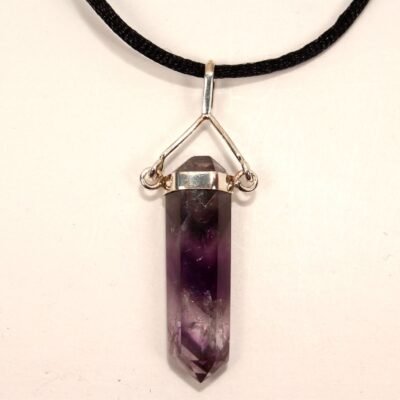
Sometimes, grounding means taking a breath, going outside for a minute or pausing before you respond. Many empaths instead lean on small physical items within reach and find grounding in them. Wearing something intentional, such as a crystal necklace, can quietly anchor you throughout the day.
Amethyst is known for its calming and clarifying effects on emotion, which is why empaths turn to it during stressful times. A delicate amethyst necklace isn’t a “spiritual act.” It feels like reassurance, a reminder to soften rather than bracing yourself.
Energetic Cleansing
Since empaths tend to take in so much, release is just as crucial as rest. Energetic cleansing is a way to release the emotions and energy that were never yours to begin with.
This doesn’t have to look like a ritual. Many people find it is a natural thing to light an evening candle, wash hands slowly or sit quietly before bed. Some prefer calming fragrances, incense or candles for rituals to signal the end to the workday.
Intentional tools from Luckshop.com often fit into these moments quietly. Not as fixes, but as signals to your body that it’s safe to exhale and let go.
Protection Without Isolation
Many empaths worry that protecting their energy means becoming cold or distant. In reality, healthy protection is about staying open without feeling drained.
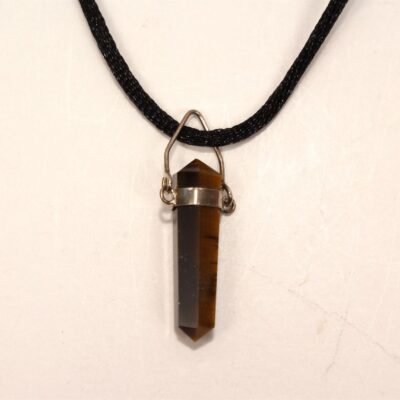
It may appear as having intentions prior to social engagements, imagining emotional boundaries, or selecting grounding support for the days that seem demanding. Tiger’s Eye, for example, is frequently associated with inner strength and stability which is helpful to remain grounded while traversing emotional tense areas.
The word “protection” doesn’t mean walls. It’s all about the balance.
Setting Energetic and Emotional Boundaries
Boundaries can feel uneasy when care comes naturally. But boundaries aren’t a sign of rejection, they’re self-respect.
Boundaries may look like these things:
Boundaries do not make you less kind. Boundaries make your kindness sustainable.
Designing a Sacred Personal Space
Your environment affects the nervous system of your body in ways that you’re unaware of. A peaceful space doesn’t need to be perfect or beautiful but it should be a space that makes you feel comfortable.
This could be a soft light or soothing scents, unique objects, or even a small space where you can relax in peace for a short time. If you make these types of decisions, the routine events of your day will begin to turn into rituals that anchor you.
Healing Tools That Support Empaths
Spiritual tools are most effective when they’re used in a gentle manner but not excessively. For empaths the most beneficial practices are typically easy to follow:
If it makes you feel more calm or clearer it’s a good reason for you to continue using it.
Listening to Your Intuition
Empaths are naturally intuitive but they are often skeptical because they are so sensitive. The ability to trust your instincts is listening to your body when it needs relaxation or peace, or even quiet.
It also means accepting emotional cycles instead of fighting them. Some days are for connection and movement. Others are for stillness and withdrawal. Both are part of balance.
When Spiritual Self-Care Becomes a Lifestyle
Spiritual self-care is most effective when it becomes an integrated part of your life, not something you turn to when you’re burned out. Over time, it ceases to feel like “self-care” and begins to feel like being in alignment, in softness, in clarity, and balance whenever possible.
Being gentle in a loud world is not a weakness. It’s wisdom.
Your Sensitivity Is a Gift
You don’t need to protect yourself for survival. Your sensitivity is not something to be worked on; it’s something you care for.
When you choose to practice spiritual self-care, you’re choosing to love yourself. It’s making the choice to accept and honor who you are instead of trying to make yourself less.
This might look like taking care of yourself through rest, through boundaries, and through small ways that you support yourself in your daily life, the ways you might discover through a place like Luckshop.com , without having to make a production out of it.Being deeply feeling isn’t the problem.
Ignoring your needs is.